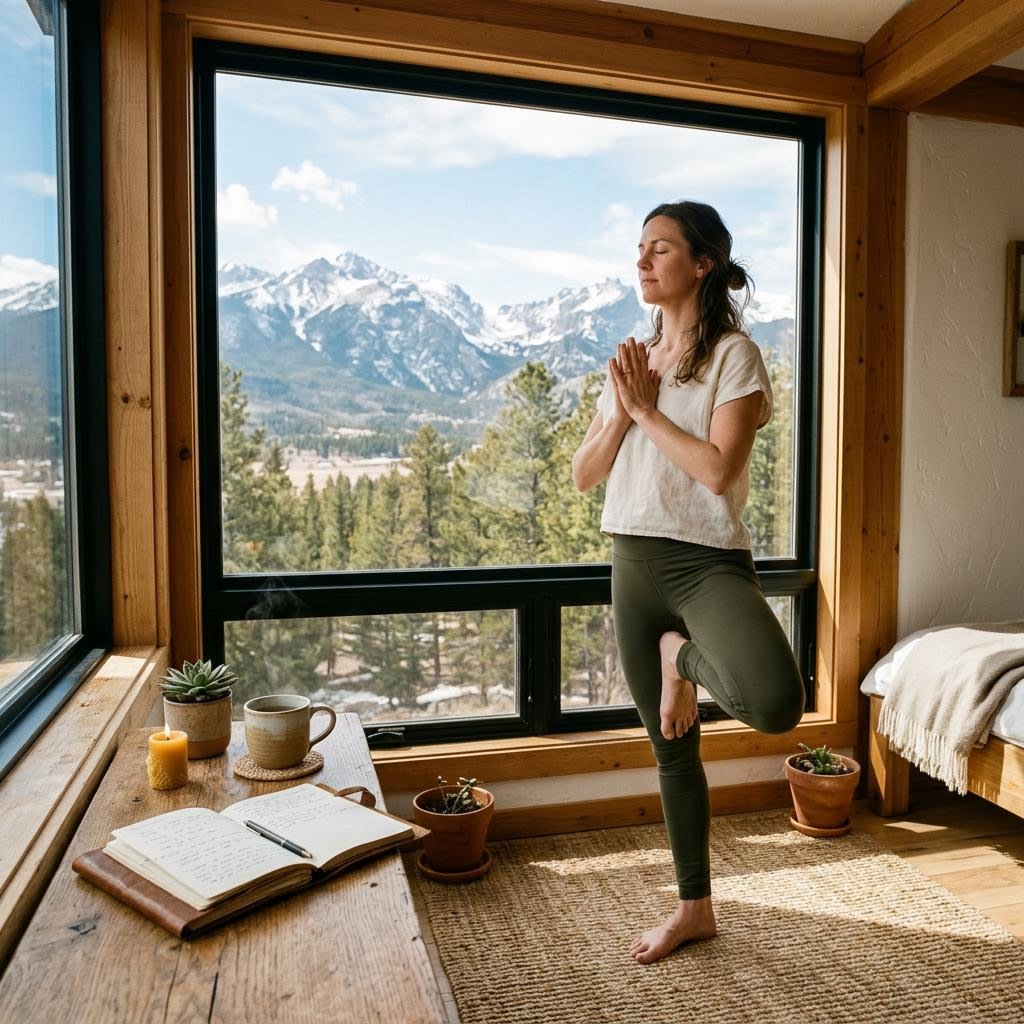
Build a Mind-Body Practice Between Psilocybin Sessions in Colorado
Sangam Team · October 4, 2026
Turn Psilocybin Insights Into a Grounded Daily Rhythm
Psilocybin work in Colorado is growing up. Many of us are no longer chasing novelty; we are looking for steady mind-body healing that actually shows up in daily life. What happens between sessions often shapes outcomes as much as the experience itself. The space in the middle is where new patterns either take root or fade away.
After a powerful psilocybin session, it is common to swing to extremes. Some people turn the process into a constant self-improvement project. Others slide back into old habits, hoping the medicine alone will carry them. At Sangam Healing Center in Lakewood, we work from a different frame: slow, rhythmic, Ayurveda-informed routines that respect your nervous system, the seasons, and your real life.
In this article, we will walk through simple daily practices you can keep up between psilocybin sessions: gentle breathwork, easy movement, sleep rhythms, and nourishing food. Our focus is on Colorado’s cooler months, when days get shorter and bodies often need more warmth and steadiness. The goal is not to build a perfect routine, but a kind one that you can actually live with.
Avoiding the Trap of Over-Integrating After Journeys
Over-integrating is when we try to do everything, all at once, with our healing. It can look like stacking a dozen new practices, analyzing every emotion, or treating your inner work like a performance. On the surface it seems committed. Underneath, it often carries a hidden belief that you must hurry up and fix yourself.
When we push like this, the nervous system can get overwhelmed. Old trauma responses may flare up, sleep gets patchy, and the body never really settles. Integration starts to feel unsafe or exhausting, instead of supportive. This is the opposite of what many people hope for from mind-body healing.
A trauma-aware pace usually feels slower and kinder than the mind expects. Some simple guides:
- Choose 1 or 2 steady practices, not 8 to 10
- Stay with them for at least 4 to 6 weeks before changing everything
- Favor grounding and warmth over intensity or peak states
- Let consistency matter more than length or drama
Cues that you may be over-integrating include feeling constantly “on,” irritable with yourself or others, spiritually perfectionistic, or burned out by your own growth work. When these signs show up, it is often a good time to pause, cut your routine in half, and let your body catch up.
Gentle Breathwork to Anchor the Nervous System
Breath is one of the simplest bridges between psilocybin insights and daily life. You carry it everywhere, it talks directly to your autonomic nervous system, and it does not require special gear. Used gently, breathwork can help you remember: “I can feel this, and stay here with myself.”
Here are a few low-intensity options that tend to be friendly after sessions:
- Coherent breathing: Inhale for 4 or 5 counts, exhale for 4 or 5 counts. Practice for 5 to 10 minutes once or twice a day. This supports balance without pushing you into a big shift.
- Longer exhale breathing: Inhale for 4 counts, exhale for 6 to 8 counts. This can be helpful for anxiety spikes or before sleep, since a longer exhale sends the “downshift” signal.
- Hand-on-heart check-ins: Place a hand on your chest, feel the contact, and take 3 slow breaths before meals or hard conversations.
You can gently layer in somatic awareness as you breathe. Notice your feet on the ground, the weight of your body in the chair, the air on your skin. Scan for simple areas of tension, like the jaw or shoulders, and see if they want to soften even 5 percent. The aim is not a perfect calm state; it is honest contact with what is here.
During Colorado’s cooler, drier seasons, breathwork pairs well with warmth. Many people enjoy:
- Warm herbal teas sipped slowly after a breath session
- A blanket around the shoulders while practicing
- Slightly slower exhalations in the evenings as a buffer against stress and early darkness
Everyday Movement That Supports Integration, Not Performance
Between psilocybin sessions, movement works best as a conversation with your body, not a test. The question shifts from “How hard can I go?” to “What kind of movement helps my system feel safer and more present right now?”
A few simple ideas that tend to be sustainable:
- Walking: 10 to 20 minutes of gentle walking, as often as feels good. Colorado’s autumn light and open skies can help insights settle while you stay linked to nature.
- Somatic or yoga-style movement: Slow stretches or flows that include your joints, spine, and hips, at a pace that allows nose breathing the whole time.
- Movement snacks: 2- to 3-minute breaks through the day to stretch, shake out your arms and legs, roll your shoulders, or stand and reset your posture.
You can “dose” movement by how you feel afterward. If you end up wired, sore for days, or unable to sleep, it might be too intense right now. The sweet spot is leaving a session feeling slightly more grounded and resourced, not crushed or depleted.
From an Ayurvedic lens, as the weather cools and days shorten, bodies often benefit from:
- Joint-lubricating movements like gentle circles for wrists, ankles, hips
- Slower pacing with more attention on breath
- A few indoor practices you can keep doing even when snow or early darkness make outdoor time harder
Sleep and Nutrition as Quiet Catalysts for Mind-Body Healing
A lot of integration work continues while you sleep. The brain and body sort memories, process emotions, and repair tissue. Often, solid sleep supports psilocybin benefits more than any advanced practice that feels impressive but wears you out.
Simple sleep-supporting rhythms can include:
- Keeping fairly steady sleep and wake times, even on weekends
- A 45 to 60 minute wind-down routine with dimmer lights, no heavy media or intense integration talks, some stretching or soft breathing
- A notebook by the bed to capture dreams or morning insights without needing to analyze them right away
Nutrition also plays a quiet but powerful role, especially through fall and winter in Colorado, when the air is often cold and dry. From an Ayurvedic perspective, many people feel better with:
- Warm, cooked, grounding foods like soups, stews, root vegetables, and whole grains
- Balanced meals that include protein, healthy fats, and fiber, to steady blood sugar and mood
- A few mindful eating habits, like taking 3 slow breaths before eating, chewing well, and minimizing screens at the table
It can be tempting to reach for extreme diets, strict fasting, or piles of supplements to force growth between sessions. We usually encourage steadiness over biohacking. When food feels sane, warm, and regular, the nervous system often has more safety to do its deeper mind-body healing work.
Building a Seasonal Practice Plan Between Sessions in Colorado
Instead of holding a long checklist in your head, it often helps to shape one simple daily rhythm that weaves breath, movement, sleep, and food together. Think of it as a “minimum viable” practice that you can expand or shrink depending on the day.
One example for cooler months might look like this:
- Morning: 5 minutes of coherent breathing, then 5 to 10 minutes of gentle movement or a short walk.
- Midday: A 2 to 3 minute stretch or movement snack, plus 3 mindful breaths before your meal.
- Evening: A warm, grounding dinner, followed by 5 to 10 minutes of longer-exhale breathing and 5 minutes of light reflection or journaling without trying to solve anything.
The timing around psilocybin sessions also matters. As a general guide:
- First week after a session: Focus on rest, very gentle breath, light walking, and emotional spaciousness. Less is often more.
- Weeks 2 to 6: Stay with your core practices. If they feel resourcing, you can slowly deepen movement or extend breath sessions, while still listening carefully to your body.
Treat your plan as seasonal and adjustable. Some phases call for more light exposure and outdoor time. Others ask for more warmth, softness, and quiet evenings indoors. The routine is there to hold you, not to trap you.
Commit to a Kind, Sustainable Rhythm Between Journeys
Psilocybin can open big doors, but it is the small, kind choices we repeat that slowly reshape our lives. Mind-body healing rarely comes from relentless self-optimization. It tends to grow from a steady mix of curiosity, care, and rest.
As a simple starting step, you might choose just one breath practice and one movement or sleep ritual to stay with for the next 30 days. Notice how your body and emotions respond, and adjust from there instead of forcing yourself through a plan that does not fit.
If you enjoy journaling, you can keep it gentle with prompts like:
- What helped my body feel 5 percent safer today?
- Where did I notice a small moment of mind-body healing?
At Sangam Healing Center, we support this kind of slow, grounded integration with trauma-informed preparation and follow-up sessions, along with Ayurvedic and somatic guidance. Our focus is on building plans that fit your nervous system and your actual life, so the work you do with psilocybin has a warm, steady place to land.
Begin Your Personalized Path To Whole-Person Wellness
If you are ready to address the root of stress, fatigue, or emotional overwhelm, we are here to support you with a tailored plan that fits your life. At Sangam Healing Center, we combine evidence-informed practices with compassionate guidance to help you reconnect with your body’s natural capacity to restore balance. Explore our mind-body healing options and choose the approach that feels right for you. Together, we can take the next step toward a calmer mind, more resilient body, and a more grounded daily experience.