Day in the Life of a Licensed Natural Medicine Facilitator in Lakewood
Sangam Team · August 13, 2026
Inside a Transformational Day at Sangam Healing Center
A day in the life of a licensed natural medicine facilitator in Lakewood is quiet, steady, and very human. It is less about dramatic breakthroughs and more about careful preparation, clear limits, and slow, honest presence with each person who walks in the door. When natural medicine is held this way, it can support deep change without ignoring safety or common sense.
At Sangam Healing Center, we bring together legal psilocybin work, psychotherapy, Ayurveda, and somatic care. Our days are shaped by this mix. In late summer, when the days are long and many people are searching for grounding before fall, we hold space for that shift. Here is how a typical day flows, what a licensed natural medicine facilitator in Lakewood is actually allowed to do, and how clear boundaries help keep this work safe and meaningful.
Grounding the Day Before Clients Arrive
Before seeing any clients, the focus is on our own nervous system. A steady presence starts at home. Many of us begin with simple habits such as:
- Enough sleep the night before
- A light, nourishing breakfast
- A short meditation or pranayama practice
- Gentle stretching, a walk, or somatic shaking
- A quiet moment to check in with our own emotions
When our body is calm and awake, we can better track subtle shifts in someone else. In trauma-informed psychedelic care, this matters. Clients may move through fear, grief, or big body sensations. If we are tense or distracted, it is harder for them to feel safe.
Clinical and ethical readiness comes next. We take time to:
- Review the day's schedule and intake forms
- Revisit treatment plans and integration notes
- Look again at risk factors and medical concerns
- Plan where we may need extra support from other providers
Colorado has a clear legal framework around natural medicine work. A licensed natural medicine facilitator in Lakewood does not diagnose or prescribe. When we see signs that a client needs medical care, psychiatric support, or crisis-level mental health help, we pause and refer. We often work in partnership with licensed therapists and prescribers so that each person gets complete care, not just a single type of support.
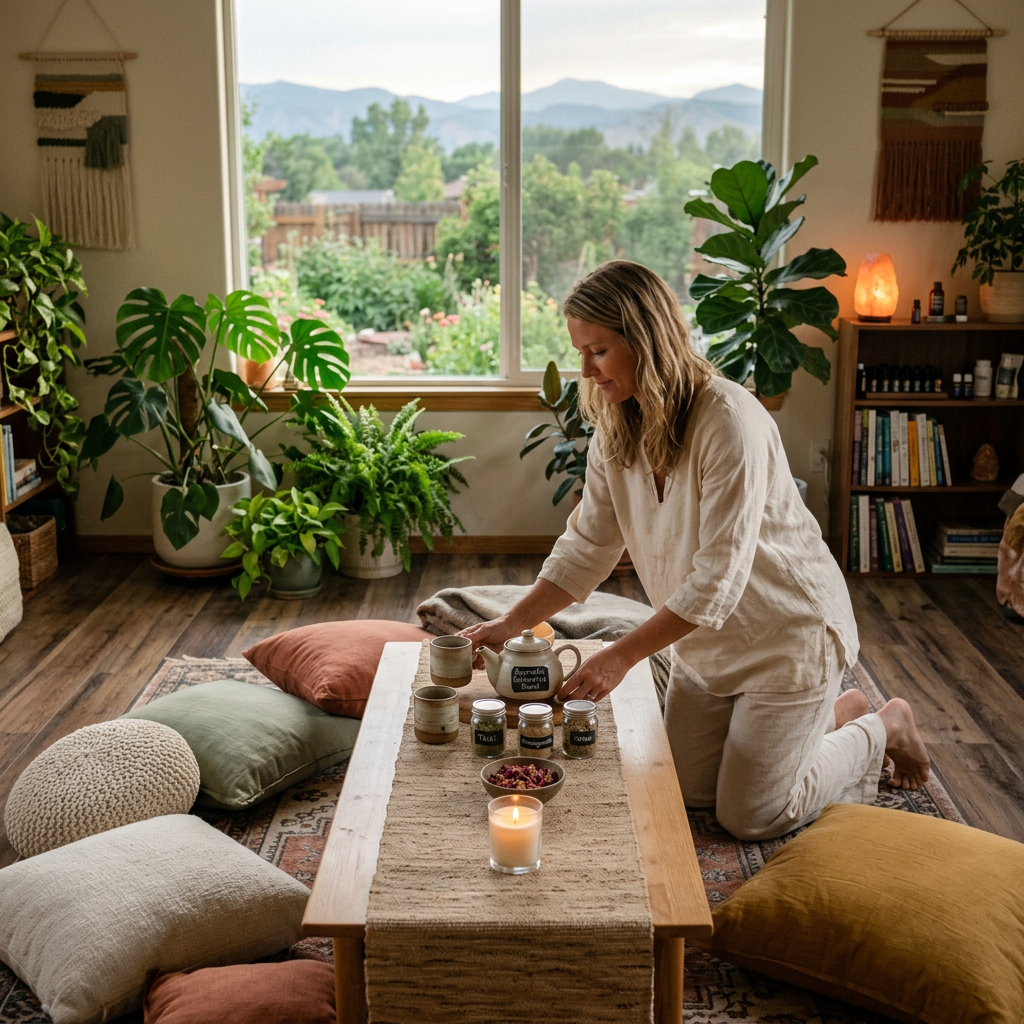
Then we prepare the physical space. In late summer, this can mean setting the room so it feels cool, grounded, and held:
- Adjusting lighting so it is soft but not dark
- Making sure water and light snacks are available
- Checking airflow and temperature for longer sessions
- Laying out cushions, blankets, and eye masks
- Setting up music options without overwhelming the senses
You may also see touches that reflect our integrative model, such as simple Ayurvedic teas, natural fabrics, or gentle, non-intrusive cultural objects. These are not there as decoration only, but to help the room feel warm, respectful, and alive.
From Intake to Intention Before Medicine
Once a client arrives, we slow everything down. The first minutes shape the whole day. We greet them in a grounded way, offer water, and orient them to the space again, even if they have been here before. We review consent in clear, plain language, and check that they still feel ready to move forward.
Before any medicine is used, we reassess:
- Current mood and emotional state
- Physical symptoms, pain, or tension
- Any changes in medications or supplements
- Recent sleep, stress, or substance use
If anything raises concern, we talk about it honestly. Sometimes that means adjusting the plan or rescheduling. Safety is always more important than staying on the calendar.
The pre-medicine conversation often includes:
- A gentle review of trauma history and current stressors
- Clarifying what the client hopes will shift
- Exploring what "support" looks like to them
- Naming fears and worries out loud
We avoid promises or guarantees. Instead, we talk about the natural-medicine experience as a process that includes preparation, the day of the session, and later integration. Trauma-informed pacing is key. Clients are invited to share, not pushed. If someone starts to look shut down, flooded, or restless, we slow down, come back to breath, or narrow the focus to what feels manageable.
We also review scope, roles, and limits in plain terms. Under Colorado's Natural Medicine laws, a facilitator:
- Guides and supports the process
- Helps with preparation and integration
- Maintains safety and ethical boundaries
- Does not diagnose mental health conditions
- Does not prescribe or change medications
At Sangam Healing Center, we are clear about who does what. Licensed therapists handle psychotherapy. Natural medicine facilitators hold the legal psychedelic work and related support. Other holistic practitioners may offer bodywork or Ayurvedic care in separate sessions. When roles are clear, clients know where to go for each kind of support.
Holding Space During Psilocybin Experiences
When the medicine part of the day begins, we first focus on grounding. We might guide:
- A short body scan
- Gentle breathing practice
- A spoken reminder of the client's intention
- Clear language on how to ask for help or a change
Once the medicine is taken, we keep a non-directive presence. That means we do not try to control what comes up. We watch breath, posture, and facial cues. We speak less than you might expect. Often we sit in quiet, letting the client's own inner wisdom lead, and only step in when support is needed.
Somatic tools are woven in with consent. A facilitator may suggest:
- Adjusting posture or position for more comfort
- Placing feet on the floor or holding a pillow for grounding
- Using slow, counted breaths during intense waves
- Light, agreed-upon touch on a shoulder or hand
Any touch is always discussed in advance and can be changed or stopped at any time. Ayurvedic ideas may show up in small ways, such as offering warm or cool tea, adjusting blankets, or shifting sensory input if someone feels too stimulated or too dull. The goal is simplicity, not a pile of techniques.
If distress rises, we respond with care. That can include:
- Naming what we notice in a calm voice
- Encouraging slower breathing and longer exhales
- Helping the client remember resources and supports
- Suggesting a pause with eyes open and feet grounded
We stay within Colorado's safety and ethical rules, including mandatory reporting when required and respect for client autonomy. Even in hard moments, we do not take control away. We offer options and stay close, but the client is always the one choosing.
Integration, Follow-up, and Healthy Boundaries
After the peak of the experience, there is a soft landing phase. We give plenty of time for:
- Resting quietly
- Drinking water and having light snacks
- Moving slowly, using the restroom, stretching legs
- Sharing a few words or images that feel fresh
Early integration is gentle. We might ask, "What stands out right now?" or "What does your body feel like?" We are not trying to turn the day into a neat story. Sometimes the most honest answer is "I do not know yet," and that is welcome.
Longer-term integration often unfolds over days or weeks. A licensed natural medicine facilitator in Lakewood may:
- Coordinate with the client's therapist when consent is given
- Encourage follow-up sessions focused on meaning-making
- Suggest support from medical providers when needed
- Help the client plan simple, realistic next steps
We stay within our scope. If a facilitator is not a licensed therapist, they do not offer long-term psychotherapy. We do not give medical advice or tell someone to change medications. We also do not promise that natural medicine will solve every problem.
Clear boundaries protect everyone, especially when people feel open and sensitive after a session. Common boundaries include:
- Set communication hours and clear channels between sessions
- No dual relationships, such as close friendship or business ties
- No social media "friending" or casual messaging
- Respect for time limits for each meeting
- Strict attention to privacy and confidentiality
These limits are not cold or distant. They are a form of care. When roles and timelines are clear, the nervous system can relax. Clients know exactly where the container starts and ends.
Taking Your Next Step with Natural Medicine Care
Feeling both drawn to and cautious about psilocybin-assisted work is normal, especially when life is shifting. Many people sense that something needs to change but also want to be sure they are safe and well supported. A thoughtful, trauma-informed model gives room for both curiosity and caution.
If you are considering working with a licensed natural medicine facilitator in Lakewood, it can help to reflect on a few basic questions: What kind of support do you already have? How do you respond to intense emotions? What are you hoping might be different in your life over time, not just in a single day?
At Sangam Healing Center, we care about legal, ethical, and steady natural medicine care that honors your whole self, including body, mind, and nervous system. Honest preparation, clear roles, grounded facilitation, and ongoing integration all matter just as much as the medicine itself.
Begin Your Personalized Healing Journey Today
If you are ready to explore natural approaches that respect your whole self, we are here to guide you. At Sangam Healing Center, our team will help you decide whether working with a licensed natural medicine facilitator in Lakewood is the right next step for your situation. Together, we can discuss your goals, create a thoughtful plan, and move at a pace that feels safe and grounded. Reach out to schedule a conversation and learn how we can support your healing path.