Psilocybin Journey as Initiation
Benjamin Dancer, MA, NMF · October 21, 2026
From my position as a Natural Medicine facilitator, the psilocybin journey often seems to take on the form of a ritual, an ancient rite of initiation. The version of the archetype of initiation I’m going to describe has three elements: separation, the ordeal, and the return.
Separation
We use psilocybin to separate from an ordinary state of consciousness and to dampen the default mode network. For many people, this is terrifying and takes tremendous trust, which is why the choice of facilitator is so important. The facilitator holds the space for what might feel unbearable to the initiant during the journey—helping the initiant to regulate, which allows for profound growth.
In this view of things, once separated from the ordinary state of consciousness, the initiant is thrown into the ordeal.
The Ordeal
There are a handful of elements to the archetypical ordeal. I’ll illustrate some of them in Ron’s story.
Confrontation with Shadow
Ron began weeping when the medicine brought him back to an incident with his three-year-old daughter. He was working in the backyard when she went out front and was attacked by a neighbor’s dog. Not only was there grief, but a stabbing pain in Ron’s stomach from the shame. He realized in that moment he had been carrying this shame for 31 years. His little girl was now 34—her face was still scarred from the attack. Ron felt the shame as energy stuck in his abdomen, as the ulcer he had been treating with prescription drugs.
Trials and Symbolic Death
Ron didn’t want to remember that attack, and he felt like the medicine was forcing him to feel it. He writhed and fought against the stabbing pain of the shame. He said it was like death.
Meeting Guides
Ron’s grandmother came to him during the journey. She kept telling him, “You’re a good dad.” Ron didn’t want to believe her. Then she told him to go inside the “cave” he felt in his stomach.
“You’re a good dad.”
Visiting Other Realms
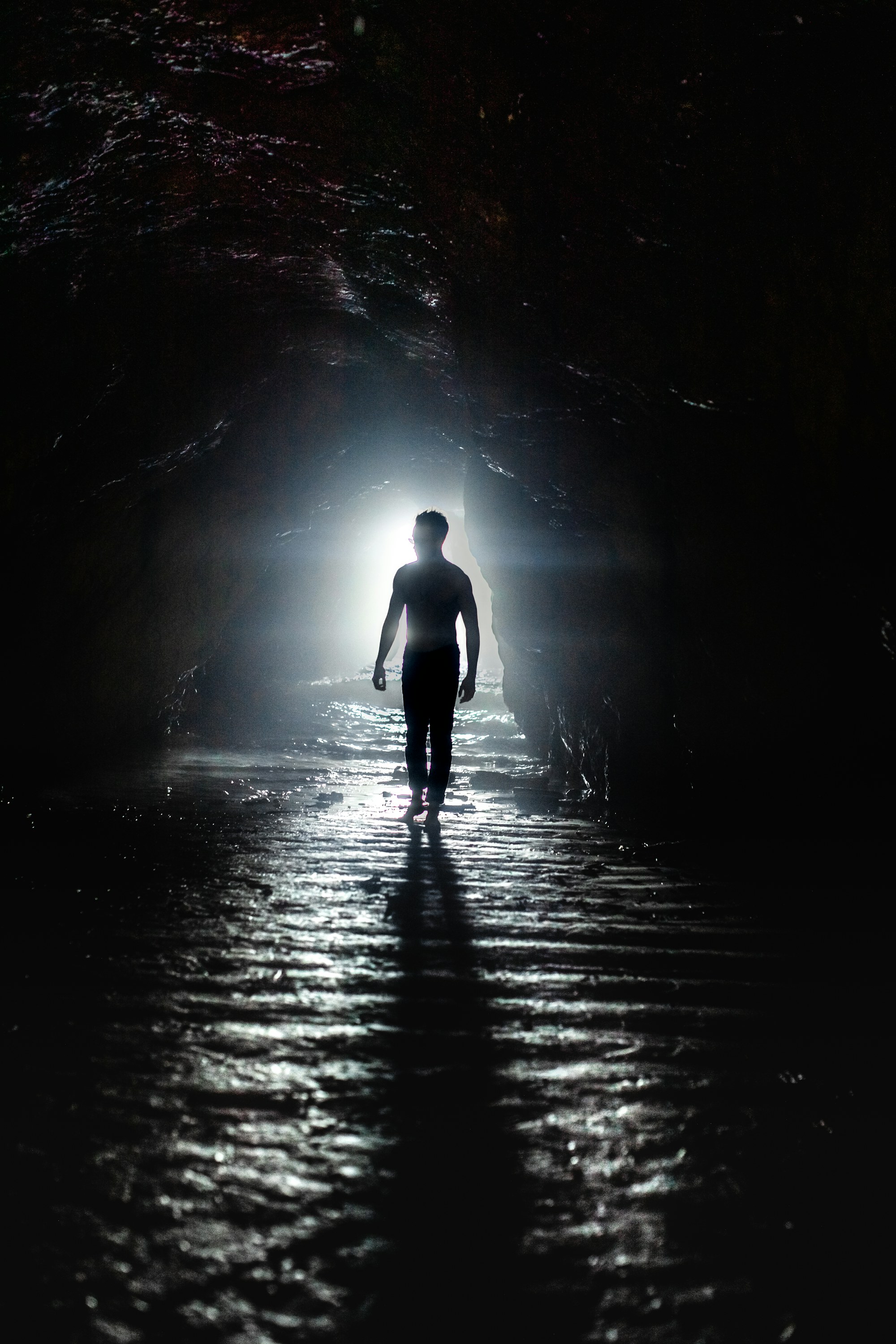
Ron went into the cave and got lost for a while. It was dark in the cave. And there were chaotic voices telling him that he was a bad person. That he failed his daughter. That he wasn’t good enough. Every once in a while, he heard his grandmother telling him, “It’s OK.” Or he saw her beckoning him forward.
Moving Stuck Energy
Ron told me he had to feel the pain if he wanted to get out of the cave he was lost in. When he started that process, he opened his legs and told me his grandmother was helping him give birth. He was sweating and trembling.
Unburdening Shame and Limiting Beliefs
The birthing took nearly 45 minutes. And when it was done, he told me his grandmother carried away the shame and buried it.
“I’m a good dad,” he told me. “She helped me see it.”
The Return
What I have witnessed over and over again is that when people unburden shame, they become more aware of their choices. With access to their innate creativity, it is easier for people to connect to their mission, to their gifts.
This is important because mission engenders sovereignty. Mission helps people step into a new role so they can give their gifts to their community.
At the end of Ron’s journey, he spent time feeling his adult daughter out there in the world. He described the cave in his abdomen as transformed into an antenna: he could tune into her. Feel what she needed from him as her dad. The resolution of the shame allowed Ron to be more attuned to his daughter and to be more open with her about his life.