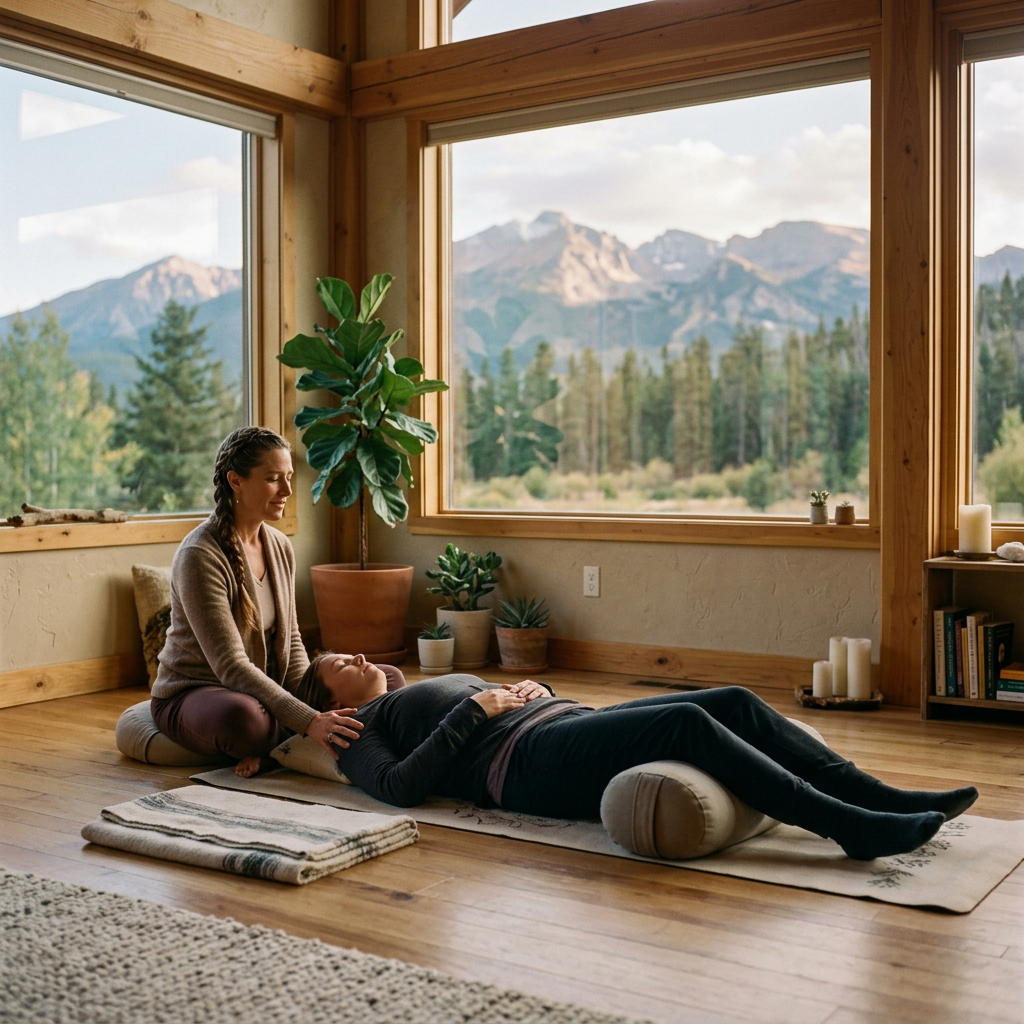
Somatic Trauma Therapy for Psilocybin Prep in Colorado: Safety and Resilience
Sangam Team · August 20, 2026
Why Your Body Is the Foundation for Psilocybin Healing
Preparing for a legal psilocybin session in Colorado is about much more than planning one big peak experience. The medicine can open deep feelings, memories, and insights, and that can feel intense if your body is already running on stress or old trauma patterns. What you bring into the session, especially in your nervous system, shapes how the experience feels and how you come back afterward.
We like to think of your body and nervous system as the container for the work. If that container feels shaky, it is easier to feel overwhelmed, spaced out, or unsafe. When the container is steadier, there is more room for curiosity, support, and healing. Somatic trauma therapy in Colorado offers a grounded way to prepare, so you are not just hoping things go well; you are building real skills before you work with psilocybin.
Understanding Somatic Trauma Therapy and the Nervous System
Somatic trauma therapy is a body-based approach. Instead of focusing only on thoughts and stories, we pay close attention to:
- Sensations, like tightness, warmth, or tingling
- Breath and how it changes with emotion
- Posture and movement patterns
- Areas that feel numb, frozen, or shut down
Our nervous systems are wired with fight, flight, and freeze responses. When something feels too much, too fast, or too soon, the body often remembers even when the thinking mind wants to move on. This can show up as:
- Chronic tension in the jaw, shoulders, or gut
- Feeling "on edge" and jumpy, or unable to relax
- Numbing out, spacing out, or having trouble feeling anything
- Sudden waves of emotion that seem out of proportion
Psilocybin tends to amplify what is already inside. If your system is already in hyperarousal (sped up) or shutdown (collapsed), those states may get louder. Doing somatic work ahead of time helps you:
- Notice early cues that your body is getting overwhelmed
- Find ways to slow down before things spike
- Build trust that you can ride waves of feeling without being swept away
This kind of preparation can turn challenging moments with psilocybin into chances to release stuck patterns instead of re-creating old trauma loops.
Building Safety and Boundaries Before a Psilocybin Session
A felt sense of safety is more than telling yourself "I am safe." It is your whole system starting to believe it. In somatic trauma therapy in Colorado, we help people notice what safety and danger actually feel like in the body. For example, safety might feel like:
- A bit more space in your chest
- A warm weight in your belly or legs
- Slower, easier breathing
- The ability to look around the room without flinching
Danger or lack of safety might feel like a racing heart, tight throat, cold hands, or a pull to leave your body or the room. Learning your own cues helps you know when to pause, ask for support, or make a different choice around psilocybin.
Boundaries are a big part of this. Many people who come to psychedelic work have histories of:
- People-pleasing or going along to get along
- Freezing when something feels wrong
- Saying "yes" when their body is saying "no"
Somatic sessions can support you in practicing saying yes and no from a grounded place. We might work on:
- Feeling your feet on the floor while you say "No, thank you"
- Noticing what a full-body "yes" feels like compared to a pressured "yes"
- Practicing consent with yourself before you push past your own limits
Before a psilocybin session, this can look like:
- Creating a comfort plan: favorite blanket, music, snacks, and aftercare
- Taking time to choose trusted facilitators or group members
- Rehearsing what to do if something feels "off," like asking for space or pausing the session
- Setting clear agreements around touch, privacy, and talking during the experience
These boundary skills lower the risk of re-traumatization and support you in feeling more in charge of your own process.
Training Your Nervous System for Intense States
We think of nervous-system resilience as your ability to feel big things and then come back to a more settled state, instead of getting stuck in panic, shut down, or chaos. Psilocybin can bring waves of fear, grief, joy, or body sensations. If your system has some practice with intensity, those waves feel more workable.
Somatic trauma therapy in Colorado can include simple tools such as:
- Grounding through your senses: noticing sounds, textures, and colors in the room
- Orienting: gently turning your head and eyes to see where you are, right now
- Paced breathing: longer exhales, or matching breath to gentle hand movements
- Small, gentle movement: pressing feet into the floor, stretching, or rocking
- Titration: touching into hard memories or sensations in very small, brief bits, then returning to something that feels safe
Common difficult moments in psilocybin sessions might include:
- A sense of being trapped in a feeling or image
- Intense body discomfort or pressure
- Sudden fear of losing control
- Big grief or anger that feels like "too much"
When you have practiced grounding, orienting, and titration, you are more likely to stay with these experiences long enough for them to shift. You also know that you can take breaks, open your eyes, feel the ground, and ask for support without "failing" the session. This is especially helpful during times of year when there is more stimulation in daily life, such as long, bright summer days or busy transitions at work and school.
Integrating Somatic Therapy with Set, Setting, and Intention
People often talk about "set and setting" for psychedelic work. Set is your mindset, and setting is your physical and social environment. Somatic practices connect directly with both.
For set, we explore how your intentions feel in your body, not just what they sound like on paper. You might:
- Speak an intention out loud and notice if you feel more open or more tense
- Sense if an intention is too big and needs to be broken into smaller steps
- Track your body's "yes," "no," or "maybe" as you refine what you are asking from the medicine
For setting, somatic awareness helps you choose an environment that feels settling instead of triggering. This could mean:
- Noticing how your body responds to different rooms, lighting, or sounds
- Choosing blankets, pillows, and seating that help your muscles relax
- Planning quiet time before and after, so your system is not rushing
At Sangam Healing Center, we also bring in an Ayurvedic-informed lens. That might include simple seasonal supports such as:
- Calming daily routines that give your nervous system some predictability
- Warm, easy-to-digest foods when your system is working hard on inner processing
- Gentle self-care practices that support sleep and digestion around the session
These pieces work together to create a steady base: your body, your mind, and your environment all pointing in the same direction.
How Sangam Healing Center Can Support Your Next Session
Somatic trauma therapy as preparation is not about avoiding challenge. It is about having enough safety, skill, and support to meet whatever arises with more choice and less shock. When your body feels included and respected in the process, psilocybin sessions are more likely to bring clarity and growth instead of confusion or overwhelm.
At Sangam Healing Center in Lakewood, Colorado, we offer support for individuals, couples, and small groups who are interested in legal psychedelic-assisted work. Our somatic sessions can focus on building body awareness, practicing boundaries and consent, and strengthening relational safety with the people you plan to sit with. We also weave in integrative, Ayurvedic-informed care to support your whole system before and after the experience, so insights from the session have a grounded place to land.
Begin Your Somatic Healing Journey With Compassionate Support
If you are ready to gently transform how trauma lives in your body, we are here to walk beside you. At Sangam Healing Center, we offer personalized, body-based care that honors your pace and your story. Explore how our somatic trauma therapy in Colorado can help you feel safer, more grounded, and more connected in daily life. Reach out today to schedule a session and take the next step toward lasting nervous system healing.